

Heating and Cooling Systems of Single‑Screw Extruder
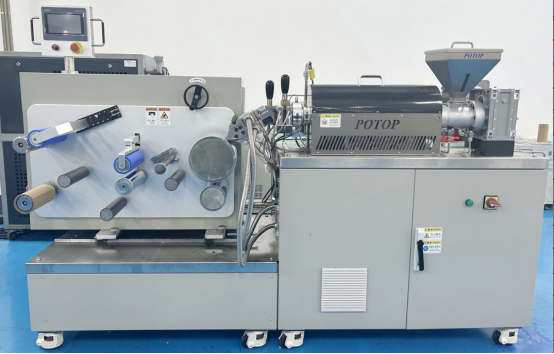
The heating and cooling systems are core components of a single‑screw extruder. Multiple technical solutions are available for each system, with distinct merits, drawbacks and application scenarios.
Heating System
Three conventional heating approaches are widely adopted: heat‑carrier heating, resistance heating and electric induction heating. Far‑infrared heating is an emerging alternative gaining growing popularity.
Heat‑carrier heatingIt delivers uniform heating performance yet requires dedicated circulating equipment. It is rarely used in production plants, except for facilities already equipped with steam or electric boilers.
Resistance heatingAs the most prevalent heating solution today, it features compact dimension, light weight and easy assembly. Its downsides include significant radial temperature gradient across the thick barrel, long preheating duration (e.g. 1‑2 hours for SJ‑65 extruder). Traditional mica‑insulated versions come with high material cost and fragile heating wires prone to burnout.
Cast‑aluminum heaters are an optimized variant of resistance heaters. Resistance wires are housed in metal tubes filled with magnesium oxide insulation, which are then cast into aluminum alloy. Without mica sheets, such heaters cut costs, extend service life and improve heat‑transfer efficiency while retaining all advantages of conventional resistance heating.
Electric induction heatingEddy current generated by electromagnetic induction directly heats the barrel and the internal material. Compared with resistance heating, it enables fast preheating, small radial temperature gradient, sensitive temperature adjustment and high thermal stability for better plastic product quality. It consumes less power since induction coils run cooler than the barrel and generally enjoys longer service life.
Nevertheless, its maximum working temperature is limited by coil insulation, making it unsuitable for high‑temperature engineering plastics. Its large radial footprint prevents deployment for die body heating. It consumes substantial silicon‑steel sheets and is inconvenient to assemble and disassemble.
Far‑infrared heating (new technology)It heats materials via direct thermal radiation without intermediate heating media, minimizing energy loss. Far‑infrared rays penetrate into materials to synchronously heat both surface and interior. This energy‑saving technology ensures even material heating and upgraded product quality, and is increasingly applied on extruders.
Cooling System
Key cooling targets cover the barrel, screw and feed throat base.
Barrel cooling: air cooling vs water cooling
Air cooling: It offers mild cooling effect but low cooling rate. Requiring blowers, it has higher cost, bulky footprint and loud noise. Its performance is susceptible to ambient temperature. It is mainly deployed on small‑to‑medium‑size extruders.
Water cooling: It achieves rapid cooling with compact size, low cost and low noise. Potential risks include abrupt quenching that disturbs stable material flow, water leakage from poor sealing, and limescale buildup clogging pipelines. Well‑designed systems adopt softened water instead of tap water.
Screw coolingWater or air serves as cooling media with adjustable water temperature. The cooling length varies according to processed materials — full‑length cooling or feed‑zone‑only cooling are both feasible. Screw cooling improves material conveying efficiency in the feed section, prevents thermal decomposition of overheated material and facilitates degassing.
Feed throat base coolingThis measure guarantees smooth feeding and shields thrust bearings and gearboxes from heat transfer for stable extruder operation. Without proper cooling, material conveying efficiency will drop and bridging phenomenon will occur at the feed opening.


